
Thursday, April 11, 2013


Wednesday, April 10, 2013
Meanwhile in Africa: A secret nuclear facility in Algeria and a looming jihadist threat in Mali
Special to WorldTribune.comGlobal Information System
The Army’s arrest and forced resignation of Malian Prime Minister Cheikh Modibo Diarra (announced in a 4.00 a.m. televised broadcast from Bamako on Tuesday, Dec. 11) and the appointment by President Amadou Toumani Touré of a new prime minister — former Administrator of the Presidential Palace Django Sissoko — did nothing to allay fears that the Republic of Mali was slipping further into dysfunction, without addressing the growing consolidation of control by jihadist groups in the country’s north.
But regional actors are also inhibiting a resolution of the situation under the guidance of the United Nations or the African Union. The Algerian government, in particular, was quietly — and seemingly successfully — pressuring the U.S. to avoid a significant military intervention into the dispute, ostensibly to avoid a costly war in the region. In any event, Washington sources confirmed that the U.S. and the European Union (EU) were keen to avoid a deployment of U.S. or European troops, largely because their forces were already over-committed because of the Afghanistan war and for budgetary reasons.
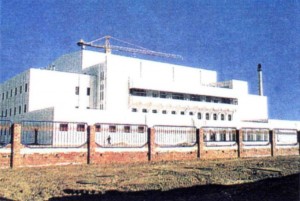
The El Salam nuclear reactor.
Indeed, the Algerian government is seriously concerned that the conflict already underway in Mali could spur nascent claims by the nomadic Tuareg peoples for a separate homeland, possibly carved out of Algeria, Mali, Niger, and Mauritania, but it would specifically target the area of Algeria’s main nuclear weapons work. Tuareg peoples make up only some five percent of the Malian population, but are focused in the sparsely-populated north where disaffection against the Malian Central Government has, in recent years, enabled them to be courted by local and foreign Islamist/jihadist movements.
While the nuclear weapons research is conducted in an isolated region of Algeria’s south, the country’s el-Salam (“Peace”) 15 MW thermal heavy water moderated nuclear reactor (which began operation in 1993) is in Aïn Oussera, in Djelfa Province (lat. 35° 27′ 5N; long. 2° 54′ 21E), in the northern part of Algeria. It is a PRC-built reactor with military/weapons development capacity. Algeria is still storing there Iraqi nuclear equipment and radioactive materials, including Iraq’s military-grade uranium originally supplied by France.
With regard to the Tuareg issue, as far as Algeria is concerned, it was important to note that the Tuareg National Movement for the Liberation of the Azawad (MNLA) recently resiled somewhat from its declaration of independence of the north of Mali.
Meanwhile, as the situation in the capital appeared to move further into stagnation (leaving northern unrest unaddressed), there were concerns that the one significant initiative to address the problems, the United Nations appointment on Oct. 6, of former Italian Prime Minister Romano Prodi as the UN General Secretary’s Special Envoy for the Sahel, with particular emphasis on the Mali conflict.
Sources in the African Union headquarters in Addis Ababa, and in the Abuja headquarters of ECOWAS (the Economic Community of West African States), however, have separately indicated concern that the Prodi mission had — two months into its work — failed to make real headway in meeting with African officials and understanding the dimensions of the Mali crisis.
At the same time, the domination of the Malian north by the jihadist movements — particularly Al Qaida in the Islamic Maghreb (AQIM) and Ansar al-Dine — as well as former Gadhafi administration fighters and their weapons from Libya — has provided a meaningful safe haven for Boko Haram combatants from Nigeria.
Nigerian officials believe that containment of Boko Haram cannot be achieved solely by addressing the jihadist group’s activities inside Nigeria, but must see a containment of Boko Haram and its strategic partner, AQIM (in particular), in northern Mali. The continued functioning of Boko Haram in Nigeria has now reached a point where it seriously jeopardizes foreign investment in the country, and therefore is seriously destablizing Nigeria as a whole. Nigeria lacks the political will and the budget to take the lead, however, in organizing a regional force through ECOWAS or the African Union to contain the Malian crisis. President Goodluck Jonathan has apparently been ready to take the steps necessary to grasp the Boko Haram issue inside Nigeria and in Mali, but has been constrained strenuously by his close team of advisors from the president’s home state, Bayelsa.
Interestingly, former Nigerian President Olusegun Obasanjo recently put himself forward to lead an AU team to address the Malian problem, but was discreetly rebuffed because it was felt that he lacked the skills needed for the task, especially in light of the fact that another former head-of-government, Italian Prime Minister Prodi, had proven to have insufficient energy and vision for the task given to him by the UN Secretary-General.
In all of this, all the multi-national bodies who have expressed strenuous concern for the growing focus of Islamist global jihadism in Mali — as the base for global operations — have also indicated that they lack funds and manpower in the current economic/political climate to address the Mali crisis. This, in effect, has been giving AQIM and others a free pass to consolidate and grow without interference. Some senior African officials indicate that the onus is very much on the Western powers to help finance and provide logistical support for an African intervention force, given that AQIM and other jihadist movements have moved to Mali simply because they have been pushed out of Afghanistan and (to a degree) Somalia by Coalition operations in those countries.
At present, the UN is the only major body to have taken at least some action on Mali, with the appointment of the Prodi mission. Among African institutions — presently concerned but paralyzed by political and economic issues — there has been a growing sense of urgency that the AU, supported by ECOWAS, needed to take a coordinating role in the complex process. AU Chair Dr Thomas Yayo Boni, President of Benin, is highly conscious, too, of the need to move quickly on this challenge, particularly before the end of his one-year tenure in the AU leadership.
Given the size of northern Mali, it is estimated that a force of at least 4,000 troops — along with logistical support, a military hospital, and airpower (including helicopter gunships) — would be needed, even for a campaign geared to stabilizing the region rather than engaging in constant kinetic warfare.
The U.S., which still derives some 25 percent of its energy imports from the Gulf of Guinea (and is therefore exposed to the Boko Haram disruption of Nigeria), has become focussed on the Mali crisis, but has yet to find funding for any remedial action in Mali. In any event, U.S. Defense funding was, by late 2012, facing severe decline and political “war fatigue”. At the same time, the U.S. State Department was preparing for significant leadership change, with the imminent retirement of Secretary of State Hillary Clinton and Assistant Secretary of State at the Bureau of African Affairs Johnnie Carson. It was expected that Gail Smith, a former Clinton Administration deputy to current U.S. Ambassador to the UN Susan Rice, would be nominated to replace Carson.
Assistant Sec. Carson on Dec. 5, testified before the U.S. Senate Foreign Relations Sub-Committee on African Affairs, on the Mali crisis. His testimony, given less than a week before the removal of the Malian Prime Minister by the Army, appears below. Significantly, and further compounding the problem for the Malian Army, was the fact that ousted Prime Minister Diarra, 60, now under house arrest, was a U.S. astrophysicist with NASA, and he had participated in a number of space exploration missions including the Magellan probe to Venus and the Galileo spacecraft to Jupiter. The manner in which the Army of Mali — which has proven totally incapable of addressing the northern security situation — removed and humiliated Diarra could well shape how Washington responds to the situation.
Indeed, the incident could well drive the U.S. to support moves which are inimical to Mali, including strengthening the appeal by Algeria to oppose conflict resolution or peacekeeping activities which would involve a focus on the Malian north. Significantly, as well, this is an area in which U.S. Army Special Forces teams have considerable experience in counter-terrorism operations. U.S. Special Operations Command (USSOCOM) troops engaged in Mali, however, felt that their Malian counterparts were insufficiently focused on “who the enemy was” in the north.
The Malian Army’s actions against Prime Minister Diarra have done nothing to assist the process of enlisting U.S. support — either unilaterally or via the UN (where the possible next U.S. Secretary of State, Susan Rice, is ambassador) — in financing or supporting a resolution of the jihadi problem in the north.
Monday, April 8, 2013

Sunday, April 7, 2013

Saturday, April 6, 2013

Monday, April 1, 2013


Sunday, March 31, 2013
WORK OPPORTUNITY TAX CREDIT (WOTC)
Work Opportunity Tax Credit (WOTC) Program
On January 3, 2013, the President signed into law the American Tax Payer Relief Act of 2012, which authorizes an extension of the WOTC program:
- Continues authorization of all veteran target groups (including those implemented under the VOW to Hire Heroes Act) until December 31, 2013
- Retroactively reauthorizes all WOTC non-veteran target groups, from December 31, 2011 to December 31, 2013
- Retroactively reauthorizes Empowerment Zones, which determines eligibility for the summer youth target group, from December 31, 2011 to December 31, 2013
e-WOTC Account Information
The Work Opportunity Tax Credit (WOTC) is a federal income tax credit that provides incentives to private for-profit employers to encourage the hiring of individuals from certain targeted groups of jobseekers who traditionally have difficulty finding employment.
Employers can reduce their federal income tax liability up to $9,600 during the first year of employment of a member of a targeted group, depending on the target group. There is no limit to the number of qualified employees for which an employer may receive this tax credit.
Employers can reduce their federal income tax liability up to $9,600 during the first year of employment of a member of a targeted group, depending on the target group. There is no limit to the number of qualified employees for which an employer may receive this tax credit.
WOTC Targeted Groups
- Qualified Temporary Assistance to Needy Families Recipients
- Qualified Veterans/Disabled Veterans
- Qualified Unemployed Veterans
- Qualified Ex-felons
- Qualified Designated Community Residents (residing in an Empowerment Zone)
- Qualified Vocational Rehabilitation Referrals
- Qualified Summer Youth (residing in an Employment Zone)
- Qualified Food Stamp Recipients
- Qualified Supplemental Security Income Recipients
- Qualified Long-term Family Assistance Recipients
- Qualified Disconnected Youth


Wednesday, March 27, 2013


Tuesday, March 26, 2013

IMF security director discusses his transition from the Secret Service
Monday, July 25, 2011
WASHINGTON—Making the transition from law enforcement to private sector security can be challenging because skills obtained in the public sector don’t necessarily translate to the corporate world.
Like many security professionals, Vincent O’Neill, chief of HQ security operations for the International Monetary Fund, began his career in the public sector, spending 20 years as an agent with the U.S. Secret Service. While he is an expert at protecting presidents and high-ranking officials, and conducting criminal investigations, O’Neill told Security Director News he had a lot to learn when he joined the IMF eight years ago.
For example, one of his primary responsibilities at IMF is to manage contracts for the organization’s electronic security systems including video surveillance, access control and data storage. He is also charged with managing the contract for the organization’s third-party guard force. Contract management was not a skill he learned in the Secret Service, he said.
“I was put in this position and expected to know everything or learn everything quickly. It was sink or swim,” he said. “One thing that I did in the Secret Service was work long hours, so working hard was not something I was unaccustomed to.”
O’Neill said one of the best decisions he made early on was not to pretend he knew it all. “Don’t try to fake that you know everything,” he said. “This was one of those times when you have to swallow your ego.” He credits other staff members with being very patient with him and helping him build his knowledge base, particularly when it came to technology. He also said a strong professional network of security practitioners and law enforcement officers has been an incredible resource for him throughout his career.
Another strategy that worked well for O’Neill was simply sitting back and listening to the needs of the organization, something that also runs counter to the training of most law enforcement officers. “Law enforcement wants to immediately take charge, they’re reactive,” he said. “But the best thing you can do as manager of security is listen first and not take charge.” Fortunately, security managers often have the luxury of a little time and are able to absorb things before taking action. “That can be a big adjustment for most guys when they come into private security, to just relax and listen and evaluate and then start making some recommendations,” he said.
Looking back, O’Neill said he would have been more involved in the technical aspect of the Secret Service and tried to learn more about IT and technical skills. He said individuals with a business or an IT background are often better prepared for positions in the private sector than those with law enforcement or military experience. “Someone who has a business degree can be just as successful as someone with a law enforcement background,” he said. Especially individuals with an IT background would be “way ahead of the game,” he said.
But his law enforcement background has been beneficial to him, especially when it comes to relating to people, he said. Especially at the IMF, which has 187 member countries representing many different cultures, O’Neill said he often has to deal with domestic issues. As a matter of fact, workplace violence is one of his biggest daily concerns. “It’s terrifying because we screen visitors and they’re escorted by our staff, but staff members have badges and they can just walk into the building and they aren’t searched,” he said. There’s little stopping an upset employee from entering the building and O’Neill said he works hard to educate employees to recognize and report individuals who demonstrate unstable behavior.
Like many security professionals, Vincent O’Neill, chief of HQ security operations for the International Monetary Fund, began his career in the public sector, spending 20 years as an agent with the U.S. Secret Service. While he is an expert at protecting presidents and high-ranking officials, and conducting criminal investigations, O’Neill told Security Director News he had a lot to learn when he joined the IMF eight years ago.
For example, one of his primary responsibilities at IMF is to manage contracts for the organization’s electronic security systems including video surveillance, access control and data storage. He is also charged with managing the contract for the organization’s third-party guard force. Contract management was not a skill he learned in the Secret Service, he said.
“I was put in this position and expected to know everything or learn everything quickly. It was sink or swim,” he said. “One thing that I did in the Secret Service was work long hours, so working hard was not something I was unaccustomed to.”
O’Neill said one of the best decisions he made early on was not to pretend he knew it all. “Don’t try to fake that you know everything,” he said. “This was one of those times when you have to swallow your ego.” He credits other staff members with being very patient with him and helping him build his knowledge base, particularly when it came to technology. He also said a strong professional network of security practitioners and law enforcement officers has been an incredible resource for him throughout his career.
Another strategy that worked well for O’Neill was simply sitting back and listening to the needs of the organization, something that also runs counter to the training of most law enforcement officers. “Law enforcement wants to immediately take charge, they’re reactive,” he said. “But the best thing you can do as manager of security is listen first and not take charge.” Fortunately, security managers often have the luxury of a little time and are able to absorb things before taking action. “That can be a big adjustment for most guys when they come into private security, to just relax and listen and evaluate and then start making some recommendations,” he said.
Looking back, O’Neill said he would have been more involved in the technical aspect of the Secret Service and tried to learn more about IT and technical skills. He said individuals with a business or an IT background are often better prepared for positions in the private sector than those with law enforcement or military experience. “Someone who has a business degree can be just as successful as someone with a law enforcement background,” he said. Especially individuals with an IT background would be “way ahead of the game,” he said.
But his law enforcement background has been beneficial to him, especially when it comes to relating to people, he said. Especially at the IMF, which has 187 member countries representing many different cultures, O’Neill said he often has to deal with domestic issues. As a matter of fact, workplace violence is one of his biggest daily concerns. “It’s terrifying because we screen visitors and they’re escorted by our staff, but staff members have badges and they can just walk into the building and they aren’t searched,” he said. There’s little stopping an upset employee from entering the building and O’Neill said he works hard to educate employees to recognize and report individuals who demonstrate unstable behavior.


Monday, March 25, 2013


Sunday, March 24, 2013


Saturday, March 23, 2013


Friday, March 22, 2013

Wednesday, March 20, 2013
Tuesday, March 19, 2013

Due to these huge reserves, and in a bid to ease the burden the bailout has had on Portugal, neutral analysts have called on the European Union to give Portugal the go-ahead to delve into these stocks, but only to give them up as a guarantee at substantially lower interest rates being charged by the EU’s major shareholders and the IMF.
The World Gold Council (WGC) suggested earlier this month that the European Parliament pushes for Portugal to be allowed to offer gold as collateral for sovereign debt issuance.
“Portugal has gold reserves in excess of 20 percent of its financing requirements over the next two years”, the World Gold Council said in a report based on research done on its behalf by the London-based group, Europe Economics.
Portugal’s gold is not the collective property of the Eurozone and is the sole beneficiary of the gold held at the Bank of Portugal in Lisbon.
But it would still need EU approval to associate its gold with any financial transaction.
The WGC stresses the obvious point that money (euros) “is abstract – numbers on a computer screen. By contrast, gold is concrete. Gold bars might sit in a warehouse or a vault. Creditors could go see them.”
While its stressed monetary actions raise considerable issues of reliability, “the concreteness and simplicity of gold as collateral makes it more credible.
“Physical gold bars could be transferred to a third party location (e.g. London). The Portuguese government would get them back when their debts were redeemed and would not get them back if they defaulted. It is difficult to see how a policy could be more credible”, the European Economics report argues.
Despite the substantial quantity of gold held by the Bank of Portugal on behalf of its citizens, the last occasion its gold was touched was in September 2006, when 20 tonnes was sold off. Despite its gold vault being closed for business the past six years, Portugal’s gold reserves are half now of what they were in 1975.
Nonetheless, Portugal’s reserves represent the highest proportion of GDP (9.49 percent) in the developed world, and when including all nations is only behind Lebanon which stands at 10.32 percent.
Meanwhile, data for October 2012 shows the United States as the overwhelming leader of gold reserves in the world, with a stock amounting to 8,133.5 tonnes, followed by Germany in a distant second with 3,395.5 tonnes. Next on the list is the IMF with 2,814 tonnes, Italy (2,451 tonnes), France (2,435.4 tonnes), China (1,054.1 tonnes), Switzerland (1,040.1 tonnes), Russia (936.7 tonnes), Japan (765.2 tonnes), the Netherlands (612.5 tonnes), India (557.7 tonnes), the ECB (502.1 tonnes), Taiwan (423.6 tonnes) followed by Portugal on 382.5 tonnes.
It has also emerged recently that while the state holds onto its gold riches, its citizens are ridding themselves of the metal at a record rate. Last year, an estimated 13 tonnes of second-hand gold were exported out of Portugal. Most of this gold was obtained by melting down jewellery purchased off desperate consumers by the more than 5,000 registered gold buyers in Portugal.
GOVERNO SEM GOVERNAÇÃO?
O défice público que significa
que não existe cobrança de impostos, dado o número de falências e o crescente
diário, constante e perigoso número de desempregados, é de 4 mil milhões e 400
mil Euros. O dinheiro do QREN, por
incrível que possa parecer, destina-se a investimentos empresariais nos CPLP. A
criação de emprego em Portugal, é assim, uma Utopia.
Em 4 anos futuros, o pagamento de
impostos das grandes empresas, e de joint ventures financeiras ligadas a
Holding’s de Bancos de Investimento, deixarão de ser efectuados em sede de
Portugal. A “mentira conveniente” da classe política, é a de apelar ao
investimento estrangeiro, quando esse investimento é realizado nas operações
financeiras na Bolsa de Valores, exactamente e não ingenuamente, para assim
obterem retornos desse capital que segue para África.
A reforma do Estado, que deveria ser
efectuada pelo Tribunal de Contas, e não decidida por presumíveis
“entendedores” da organização financeira do Estado, serve apenas para despedir
cegamente, os excedentários, e cegamente significa: “quem são os
excendentários?” e “quem é que decide quem são os excendentários?”, novamente,
e face à lei, deveria ser competência
legal do Tribunal de Contas essa análise técnica, e não partir de decisão
governamental, com ou sem, acordo parlamentar.
Neste caso, o cenário de uma
fracção populacional inactiva, prolonga a crise do défice público, porque os “inactivos”
são uma despesa orçamental pública colossal.
Os banqueiros, pouco interessados
nos depósitos bancários oriundos do “trabalho”, dado que não vinga a
competitividade empresarial portuguesa, face à globalização, e face à
globalização, resta a Portugal recorrer das exportações tradicionais, para
novos mercados, que não exactamente o mercado comunitário em crise e também,
com a desistência de reformular o valor do trabalho em relação ao tipo de contrato
laboral, que na minha opinião, o conceito da “flexibilidade” dos contratos
laborais, encontra-se em contradição com as políticas dos Países emergentes,
porque nos Países em Desenvolvimento, os contratos de trabalho asseguram os
impostos. A acrescentar ainda a ideia conceptual da “refundação do Estado” muito vazia de conteúdo ideológico, não observando
critérios de competências versus salários, e questionando :“Para quê Governo
sem Governação?”.
Monday, March 18, 2013

Saturday, March 16, 2013
Thursday, March 14, 2013
Sunday, February 17, 2013

Thursday, February 14, 2013
Tuesday, January 22, 2013
FÁTIMA ROQUE ABRE BANIF EM ANGOLA
Luanda - Esta por abrir, no mercado angolano, um novo banco cuja proposta ou pedido de abertura é atribuído a antiga Secretaria para os assuntos econômicos da UNITA, Maria Fátima de Moura Roque.
O processo foi alvo de estudo remetido ao “branch” da “inteligência financeira” devendo aguardar aprovação “superior” via Conselho de Ministro.
Pessoas de “ma fé” consideradas tendenciosa s estão associar, agilidade do processo do novo banco como resultado de uma alegada vassalagem consubstanciada na troca da aparição de Fatima Roque, em Setembro ultimo, a uma comício partidario em Luanda declarando seu voto ao “partido do coração”.
A aproximação de Fátima Roque ao regime do MPLA acentuou-se via Embaixada de Angola em Lisboa na pessoa de Assunção dos Anjos ex Embaixador com quem passou a ter boa amizade. A ex dirigente do “Galo Negro” era frequentemente chamada para cerimônias diplomaticas da mesma. Em 2004 deu cara a um congresso de quadros angolanos, em Lisboa, realizado por uma organização FACIDE, que teve encorajamento da Presidência angolana.
Alguns dados atestam que esta aproximação ao regime do MPLA é remota estando na base da sua expulsão das fileiras da UNITA. Numa viagem feita a Luanda para contactos, a delegação da UNITA que ela acompanhava, na decada de 90, teria notado a certa altura a sua falta sem que a mesma tivesse justificado para onde teria ido. A informação chegou aos ouvidos de Jonas Savimbi que ela manteve contactos a margem da missão e este tomou a mesma como “traição”. Savimbi retirou - lhe confiança e a expulsou do partido.
Não são conhecido maus dizeres seus contra a UNITA ou contra a pessoa de Jonas Savimbi de quem diz ter enorme consideração. Esteve no primeiro congresso que elegeu Isaias Samakuva, figura a qual goza de boa amizade. Outro no “Galo Negro” com que muito aprecia é Alcides Sakala antigo Representante da UNITA em Lisboa com quem chegaram a trabalhar juntos, em missões que resultaram na recepção considerada com cunho de estado de Savimbi em Lisboa.
Fátima Roque foi casada com Horacio Roque presidente do grupo do banco, BANIF, uma instituição que Savimbi teria certa participação de cota segundo rumores alimentados por elementos do MPLA da linha de José Ribeiro e João Melo. O BANIF festejou no passado dia 15 de Setembro na cidade do Porto, os 20 anos de existência
Sunday, January 20, 2013


Friday, January 18, 2013
Wednesday, January 16, 2013
CAMARATE - CIA FILE : OCTOBER SURPRISE
The October Surprise conspiracy theory refers to an alleged plot to influence the outcome of the 1980 United States presidential election between incumbent Jimmy Carter (D–GA) and opponent Ronald Reagan (R–CA).
One of the leading, national issues during that year was the release of 52 Americans being held hostage in Iran since November 4, 1979.[1] Reagan won the election. On the day of his inauguration, in fact, 20 min after he concluded his inaugural address, the Islamic Republic of Iran announced the release of the hostages. The timing gave rise to an allegation that representatives of Reagan's presidential campaign had conspired with Iran to delay the release until after the election to thwart President Carter from pulling off an "October surprise".
According to the allegation, the Reagan Administration rewarded Iran for its participation in the plot by supplying Iran with weapons via Israel and by unblocking Iranian government monetary assets in US banks.
After twelve years of mixed media attention, both houses of the US Congress held separate inquiries and concluded that the allegations lacked supporting documentation.
Nevertheless, several individuals—most notably former Iranian President Abulhassan Banisadr,[2] former Naval intelligence officer and National Security Council member Gary Sick; and former Reagan/Bush campaign and White House staffer Barbara Honegger—have stood by the allegation. There have been allegations that the plane crash that killed the Portuguese Prime Minister,Francisco de Sá Carneiro, in 1980 was in fact an assassination of the Defence Minister, Adelino Amaro da Costa, who had said that he had documents concerning the October surprise conspiracy theory and was planning on taking them to the United Nations General Assembly
Subscribe to:
Posts (Atom)
Decode decrypt SHA 256
# ============================================================ # SECP256K1 REVERSIBLE DECODER # P = k^{-1} · C → bytes # ============...


